


How the No Entry sign keeps UK drivers safe
The No Entry sign helps keep everyone on UK roads safe, whether they live here or are visiting, and whether they drive or ride. The Highway Code, first published in 1931, sets out the rules of the road in England, Scotland and Wales. It is updated regularly to keep up with new vehicles, new roads and new safety advice. It helps protect drivers, people walking, cyclists and everyone else on the road.
Traffic signs are a big part of the Highway Code. Each type of sign has its own shape and colour, so you can recognise it quickly anywhere in the UK. Alongside signs such as Stop and Give Way, there are other road signs that give orders drivers must obey. The No Entry sign is one of them.
Step 1: What the sign means
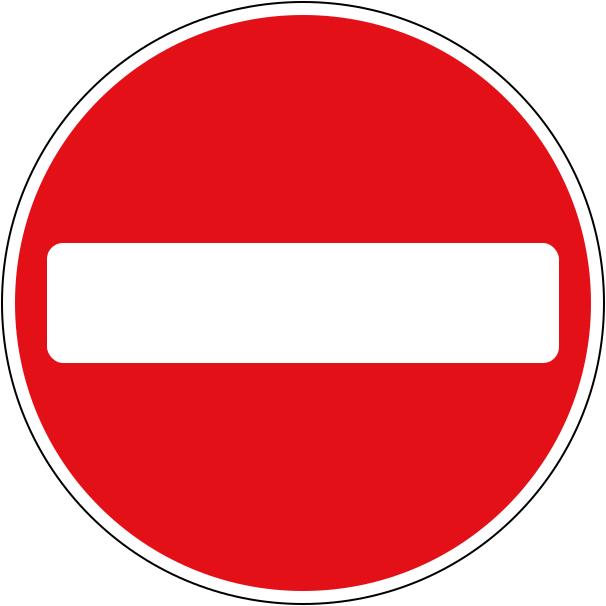
The No Entry sign is a red circle with a white bar across the middle. It means no entry for vehicles. It is not a warning: it is an order, like the other circular signs in the signs giving orders section of the Highway Code. You MUST NOT drive past it. It is usually placed where a road, or part of a road, must not be entered from that end, such as the far end of a one-way street.
Sometimes buses or cycles are allowed through. Then, as Know your traffic signs explains, the sign may have a plate below it, such as Except buses or Except cycles. If there is no plate, the sign applies to all vehicles.
Do emergency vehicles have to obey it?
The law gives emergency vehicles some specific exemptions, but the traffic signs regulations do not list one for the No Entry sign:
- Red traffic lights: under the Traffic Signs Regulations and General Directions 2016, fire, ambulance, police and some other emergency vehicles may go past a red light, but only in a way that does not put anyone in danger or make another driver change speed or direction.
- Keep left signs: under the same regulations, these vehicles may pass on the other side of a keep left sign, as long as they do not put anyone in danger.
- Speed limits: section 87 of the Road Traffic Regulation Act 1984 lets them exceed the speed limit when keeping to it would get in the way of an emergency call.
If you are driving and an emergency vehicle comes up behind you, let it pass, but keep to all traffic signs while you do (Highway Code rule 219). Never go past a No Entry sign to get out of its way.
Step 2: Where you will see it
No Entry signs are there to stop drivers going the wrong way and meeting traffic head on. You will often see them:
- at the far end of a one-way street, to stop traffic entering against the flow
- at the end of a slip road that leaves a motorway or dual carriageway, to stop drivers going up it the wrong way
- where a two-way road becomes one-way
- at the entrance to a road for buses or cycles only, often with an Except buses or Except cycles plate
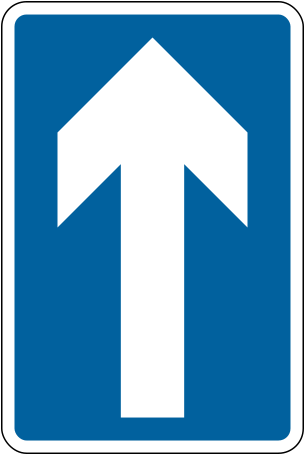
At the other end of a one-way street, you will usually see the blue rectangular One-way traffic sign, which shows the direction you may drive in.
Step 3: Why it matters and where it came from
People have put up signs beside roads for centuries, but signs that control traffic became much more important once motor cars arrived. According to the history in Know your traffic signs, a committee was asked in 1931 to recommend better signs, and by 1933 new signs had begun to appear, including No entry and Keep left signs. In the 1960s, the UK adopted the main principles of the European system, with prohibitions shown in a red circle. Work on changing British signs to the new system began in 1965, and it is still the basic system in use today.
The No Entry sign matters because driving the wrong way into a one-way road or slip road can lead to a head-on crash.
Step 4: When to obey it
Always. The No Entry sign means what it says: do not enter. If you come to one you were not expecting, do not go past it. Find another way, using a map or sat nav if you need to.
If you realise you have gone past a No Entry sign by mistake, stop as soon as it is safe, out of the way of oncoming traffic. Only turn round or reverse when you can do it safely. Do not reverse further than you need to (rule 203), and do not reverse from a side road into a main road (rule 201).
Step 5: Penalties for ignoring it
Not obeying a No Entry sign is an offence under section 36 of the Road Traffic Act 1988. The usual penalty is a £100 fixed penalty and 3 penalty points on your licence (endorsement code TS50, failing to comply with a traffic sign). The police may instead take you to court, for example if you caused danger. If the court convicts you, the fine can be up to £1,000, and you still get 3 points.
If you get 12 or more penalty points within 3 years, you must be disqualified from driving for at least 6 months. If you passed your test less than 2 years ago, 6 points are enough to lose your licence. You can check all the codes on GOV.UK's list of endorsement codes and penalty points, and how bans work on the driving disqualifications page. If ignoring a No Entry sign leads to a collision, you could also be prosecuted for careless or dangerous driving, and be held responsible for the damage.
Sign pictures: drawings of the official UK traffic signs from Wikimedia Commons, containing public sector information licensed under the Open Government Licence v1.0.


